
Get In Touch
hello@digitallyscaled.com
Ph: +1 (713) 949-5161
Office
Houston, TX, United States
Home/AI/AI for Logistics & Supply Chain
AI for Logistics & Supply Chain

AI that sees delays before they happen.

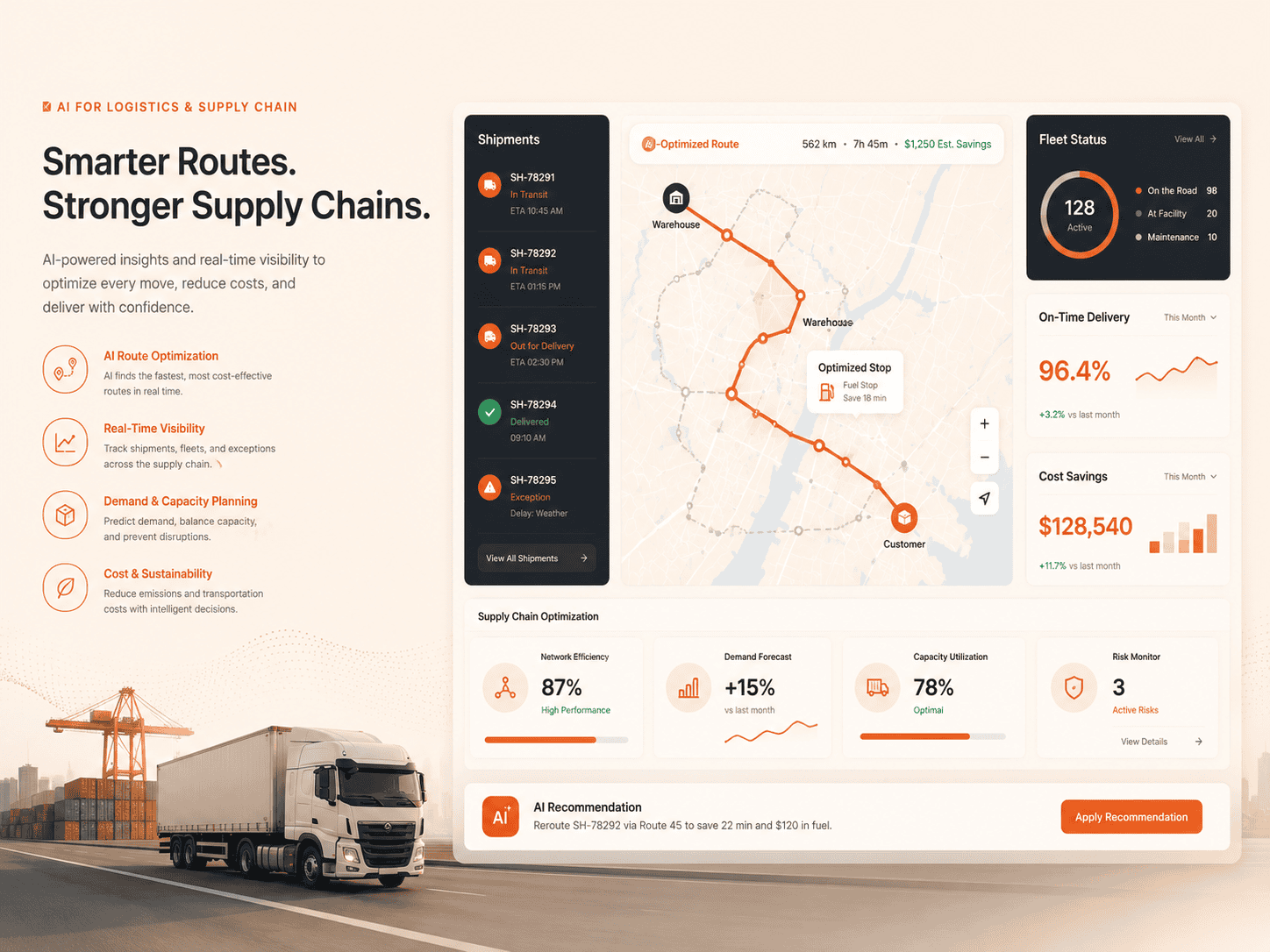
AI solutions for logistics and supply chain — built to catch delays and disruptions early, when there's still time to act.
AI for Logistics & Supply Chain digitallyscaled
24+
Logistics AI Projects
+26%
Avg. Efficiency Gain
6–12 wks
Avg. Build Time
24/7
Support
Overview

Why AI genuinely helps supply chains anticipate problems, not just react

Traditional supply chain management tends to be reactive by nature — teams learn about delays, shortages, or disruptions after they've already happened, then scramble to mitigate the damage. AI applied to supply chain and logistics genuinely shifts this dynamic by identifying patterns and early warning signals across your supply network, giving teams meaningful lead time to address problems before they cascade into missed deliveries or stockouts that damage customer relationships.

The most valuable applications typically center on predicting delays before they materialize, optimizing routes in response to genuinely real-time conditions rather than static planning, and improving demand forecasting accuracy across your supplier and carrier network. This does require reasonably reliable data feeds — the quality of prediction genuinely depends on the quality of underlying data, and we're honest about what data infrastructure improvements might be needed before AI can deliver its full potential value. We build systems that work across multiple suppliers and carriers simultaneously, since most supply chains genuinely involve numerous external parties, and route optimization that adapts to real-time conditions — traffic, weather, delays upstream — provides considerably more practical value than static route planning that assumes ideal conditions.

What's Included

Everything this solution actually covers

Demand Forecasting

Forecasts that account for real seasonality and disruption patterns.

Route Optimization

AI-driven routing that adapts to real-time conditions.

Risk & Delay Prediction

Early warning on potential supplier or shipping delays.

Inventory Optimization

AI-informed stock levels that balance cost against availability.

Warehouse Automation

AI-assisted picking and layout optimization.

Ongoing Support

We stay on for retraining as supply chain patterns shift.

Our Process

How we get there

01

Discover

We assess your supply chain data and highest-impact opportunities.

02

Design

We design the AI use case around your specific network and constraints.

03

Build & Validate

We build and validate against real historical performance.

04

Deploy & Support

We deploy and support ongoing operation and retraining.

Tech We Use

Built on tools that scale with you

PythonProphetOR-ToolsSQL
Recent Work

A few projects we’ve shipped recently

Kestrelworks Commerce
Retail

Kestrelworks Commerce

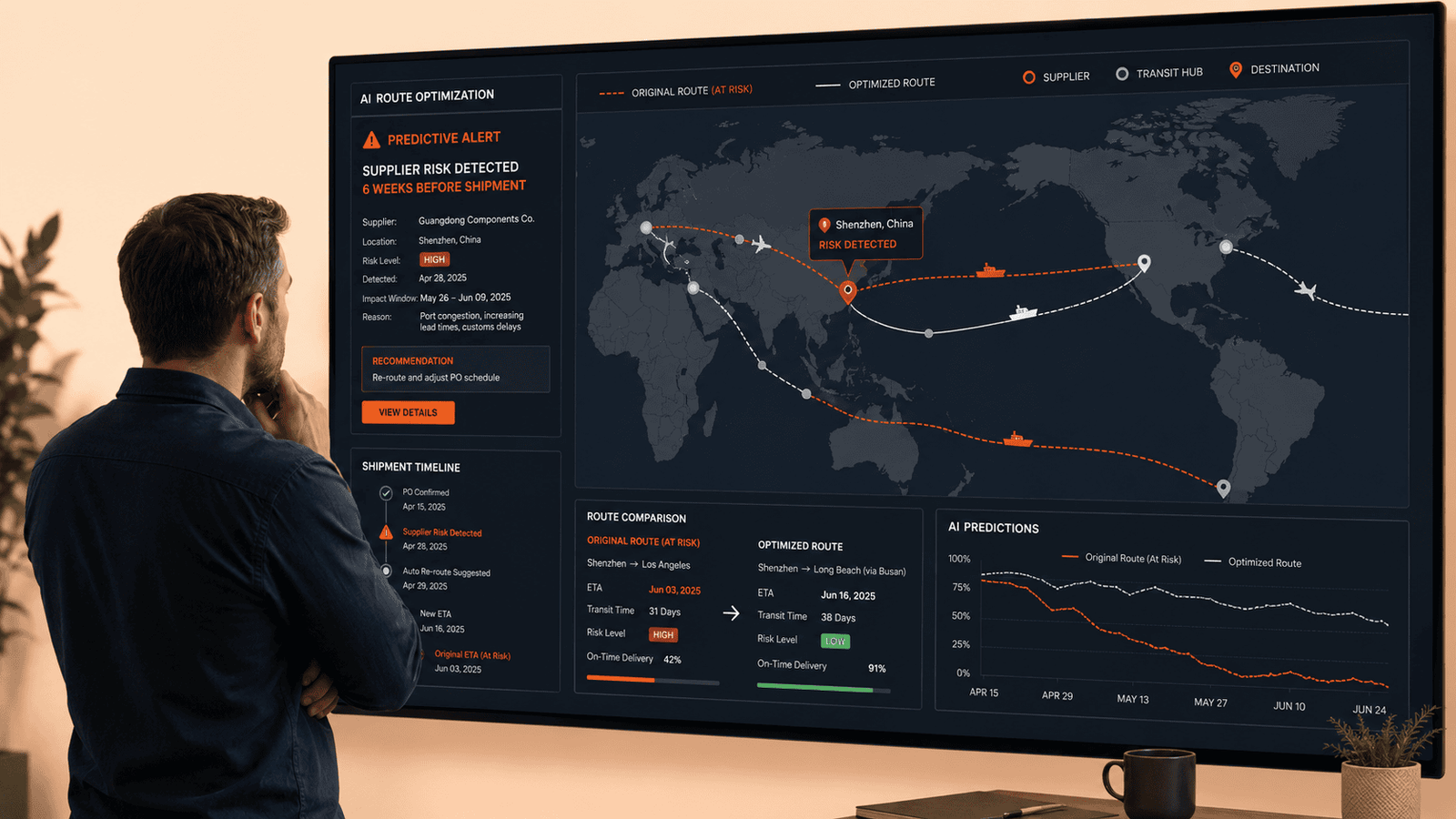
A delay-prediction system that flagged supplier risk weeks before shipment dates.

View Case Study
Lumenary Technologies
SaaS

Lumenary Technologies

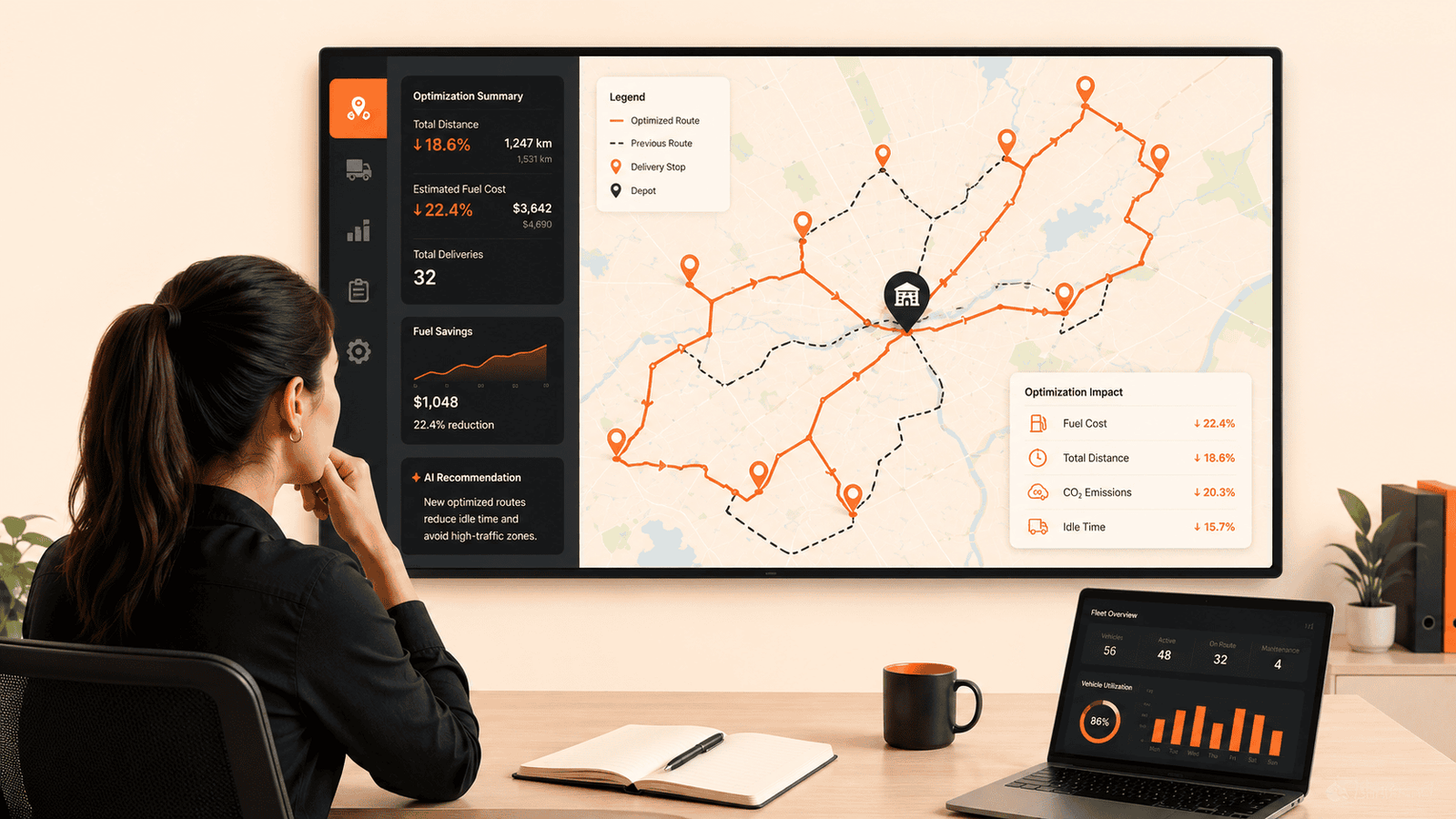
A route optimization model that reduced fuel costs across a regional fleet.

View Case Study
Marrowvale Medical Group
Healthcare

Marrowvale Medical Group

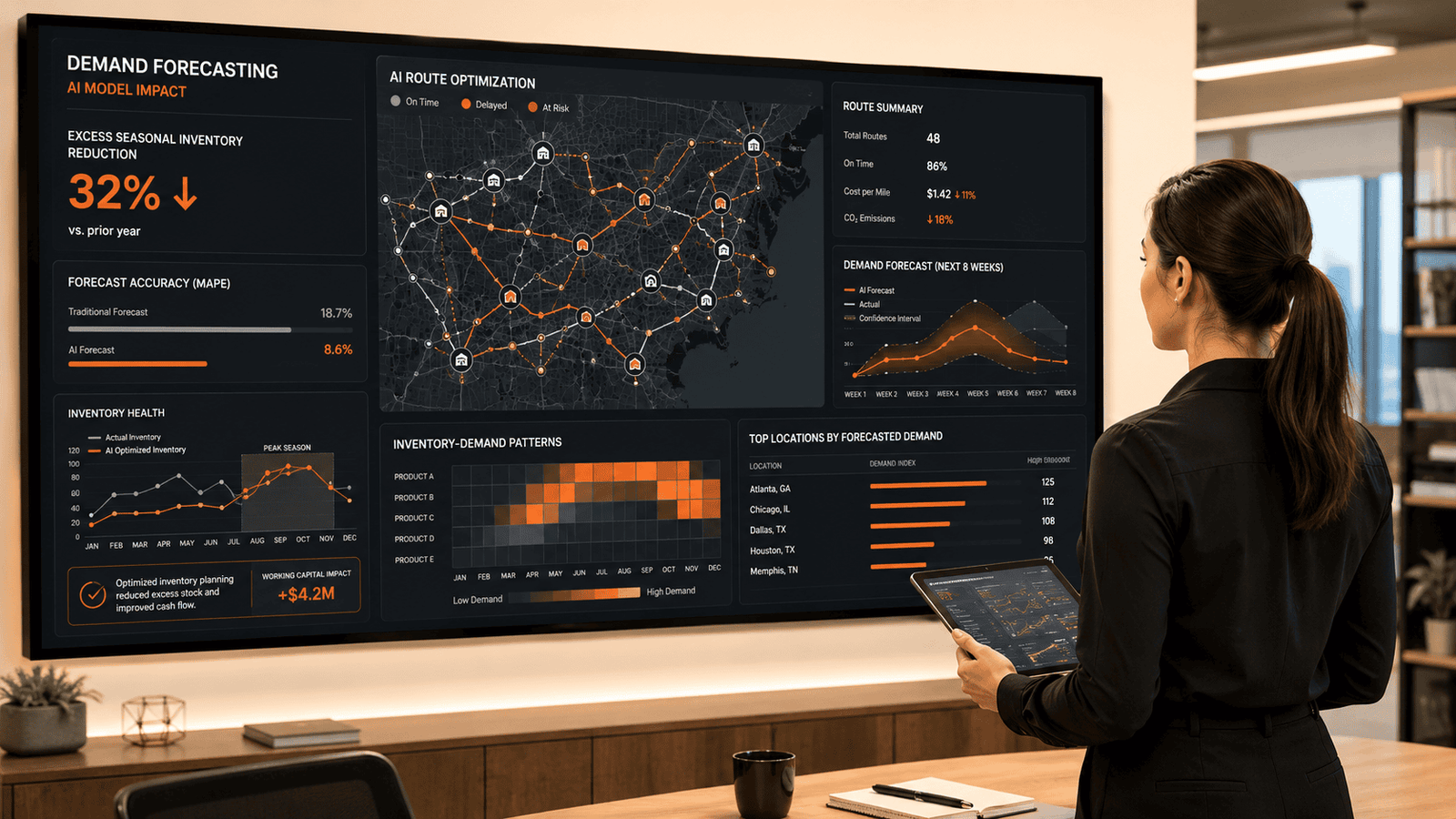
A demand forecasting model that reduced excess seasonal inventory.

View Case Study
Novasound Capital
Finance

Novasound Capital

A warehouse picking optimization that reduced average fulfillment time.

View Case Study
Testimonial

What clients say

“What stood out was how grounded the whole approach was, not just chasing what's trendy. +26% conversion rate within a few months, and that's held up months later.”

GN
Gideon Norquist

Director of Strategy, Kestrelworks Commerce

FAQ

Common questions

What supply chain problems does AI typically help with most?

Demand forecasting, delay prediction, and route optimization tend to have the clearest, most measurable ROI.

Do you need real-time data feeds for this to work?

Some real-time or near-real-time data helps for delay prediction specifically, though forecasting can work well with historical data alone.

Can it work across multiple suppliers and carriers?

Yes, models are typically built to account for your full network, not just a single supplier or carrier.

How does route optimization adapt to real-time conditions?

By incorporating live traffic, weather, and other relevant data alongside historical routing patterns.

How long does a logistics AI project take?

Most projects take 6–12 weeks depending on data availability and network complexity.

Can this help us identify which suppliers are most likely to cause delays?

Yes, supplier risk scoring based on historical performance patterns is a valuable application that helps prioritize proactive management attention.

Does this work for both domestic and international supply chains?

Yes, we build systems accounting for the additional complexity international supply chains involve, including customs and longer transit variability.

Can AI help optimize warehouse inventory levels, not just shipping routes?

Yes, inventory optimization based on demand forecasting is a common complementary application alongside route and delay prediction.

How do you handle supply chain disruptions that are genuinely unpredictable?

No system can predict truly novel disruptions perfectly, but we build in the ability to quickly incorporate new information and adjust once disruptions do occur.

Do you integrate with existing ERP or supply chain management software?

Yes, integration with your existing systems is a priority, avoiding the need to replace infrastructure you've already invested in.

Can smaller businesses with simpler supply chains benefit from this too?

Yes, though the specific approach scales to your actual complexity — a smaller supply chain doesn't need the same sophistication as a large multinational network.

Can this help reduce excess inventory carrying costs?

Yes, improved demand forecasting typically helps reduce excess inventory by aligning stock levels more closely with genuine actual demand patterns.

Do you support real-time tracking across the entire shipment lifecycle?

Yes, end-to-end shipment visibility from origin to delivery is a core part of what we build into logistics AI systems.

Can smaller logistics operations benefit, or is this only for large enterprises?

Smaller operations can benefit too, with the specific scope and complexity scaled appropriately to your actual operational size.

Do you provide dashboards showing supply chain health at a glance?

Yes, we build dashboards that summarize key supply chain risk and performance indicators for quick, at-a-glance visibility.

Do you provide ongoing support after the initial system is deployed?

Yes, ongoing support is available to help refine the system as your supply chain and data patterns evolve.

Ready to explore AI for Logistics & Supply Chain?

Let's talk about your project — no pressure, just a straightforward conversation about what you need.

Talk to an AI Expert

This website stores cookies on your computer. Cookie Policy