
Get In Touch
hello@digitallyscaled.com
Ph: +1 (713) 949-5161
Office
Houston, TX, United States
Home/AI/AI for Healthcare
AI for Healthcare

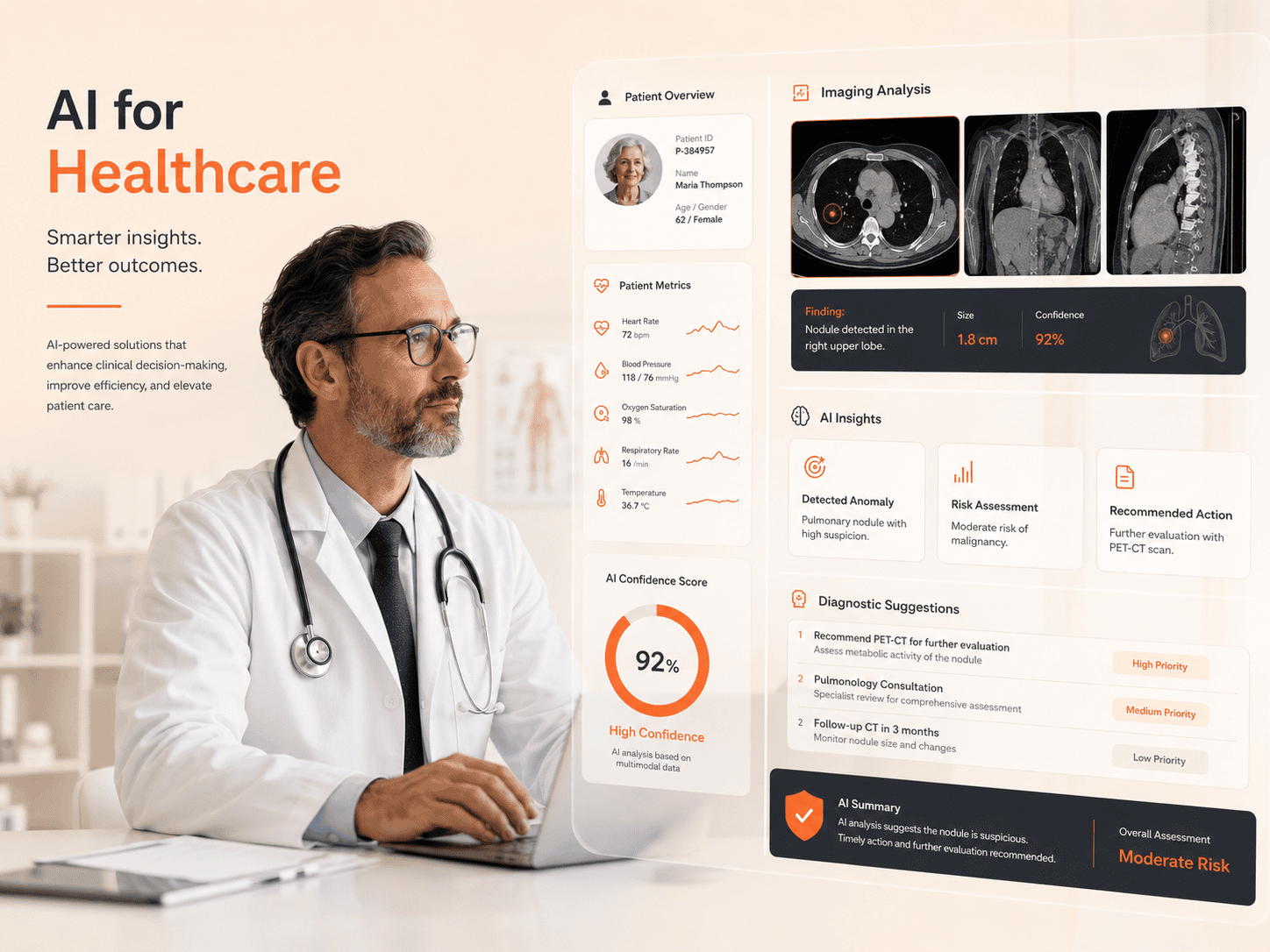
AI that supports clinical work, not complicates it.

AI solutions for healthcare organizations — built with clinical workflows and patient data sensitivity in mind from day one.
AI for Healthcare digitallyscaled
18+
Healthcare AI Projects
96%
Client Satisfaction
8–14 wks
Avg. Build Time
24/7
Support
Overview

Why healthcare AI needs to support clinicians, not second-guess them

Healthcare AI that positions itself as replacing clinical judgment genuinely misunderstands where this technology adds real value — the highest-value applications support clinicians by handling the administrative and pattern-recognition burden that pulls time away from actual patient care, while genuine diagnostic and treatment decisions remain firmly with trained medical professionals. We build with this distinction as a foundational design principle, not an afterthought added to address liability concerns.

Patient data handling receives particular care given the genuine regulatory weight and sensitivity involved, with privacy and security built into architecture from the start rather than layered on after the fact. Integration with your existing EHR system is a priority, since AI capability that requires clinicians to work outside their established workflow creates genuine adoption friction regardless of how sophisticated the underlying technology is. Common healthcare AI use cases include administrative automation, early risk identification, and clinical documentation support, though the genuinely right starting point depends on your specific organizational pain points. We're realistic about project timelines given the genuine complexity and stakes involved in healthcare technology, which benefits from careful, unhurried development rather than a rushed approach.

What's Included

Everything this solution actually covers

Compliance-Aware Design

Built with relevant healthcare data requirements in mind from the start.

Clinical Data Integration

Clean integration with EHR and other clinical data systems.

Predictive Risk Models

Models that help flag risk early, supporting clinical judgment, not replacing it.

Administrative Automation

AI applied to administrative burden, freeing clinical staff for patients.

Clinical Decision Support

Tools designed to inform, not override, clinical decision-making.

Ongoing Support

We stay on for updates as clinical needs and regulations evolve.

Our Process

How we get there

01

Discover

We work with clinical and administrative stakeholders to understand real needs.

02

Design

We design AI solutions around supporting, not replacing, clinical judgment.

03

Build & Validate

We build and rigorously validate against clinical requirements.

04

Deploy & Support

We deploy carefully and support ongoing operation.

Tech We Use

Built on tools that scale with you

PythonHL7/FHIRPyTorchAWS HealthLake
Recent Work

A few projects we’ve shipped recently

Vantagepoint Commerce
Retail

Vantagepoint Commerce

A predictive risk model that helped flag at-risk patients earlier.

View Case Study
Northlake Technologies
SaaS

Northlake Technologies

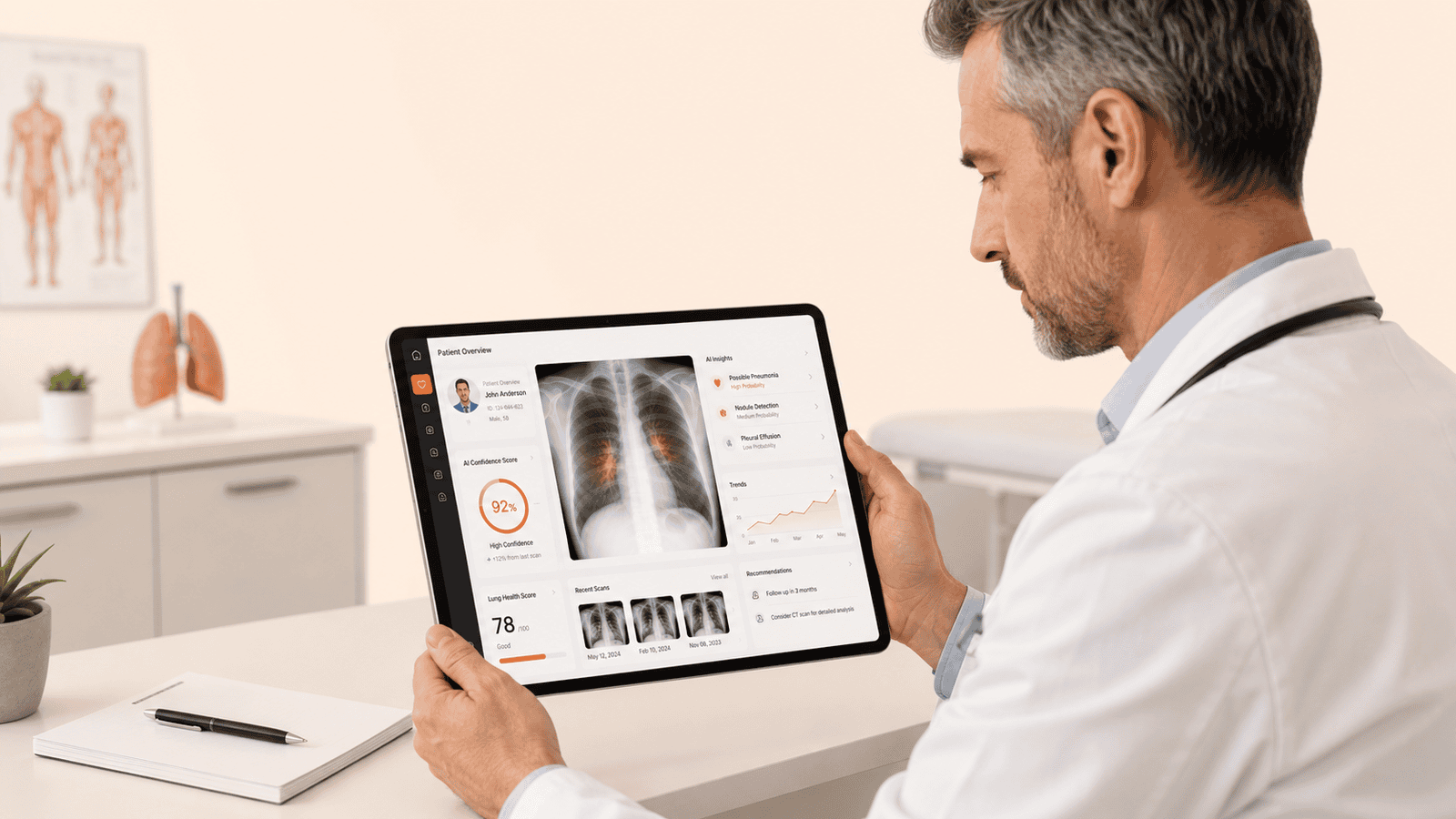
An administrative automation tool that reduced clinician documentation time.

View Case Study
Cortexa Medical Group
Healthcare

Cortexa Medical Group

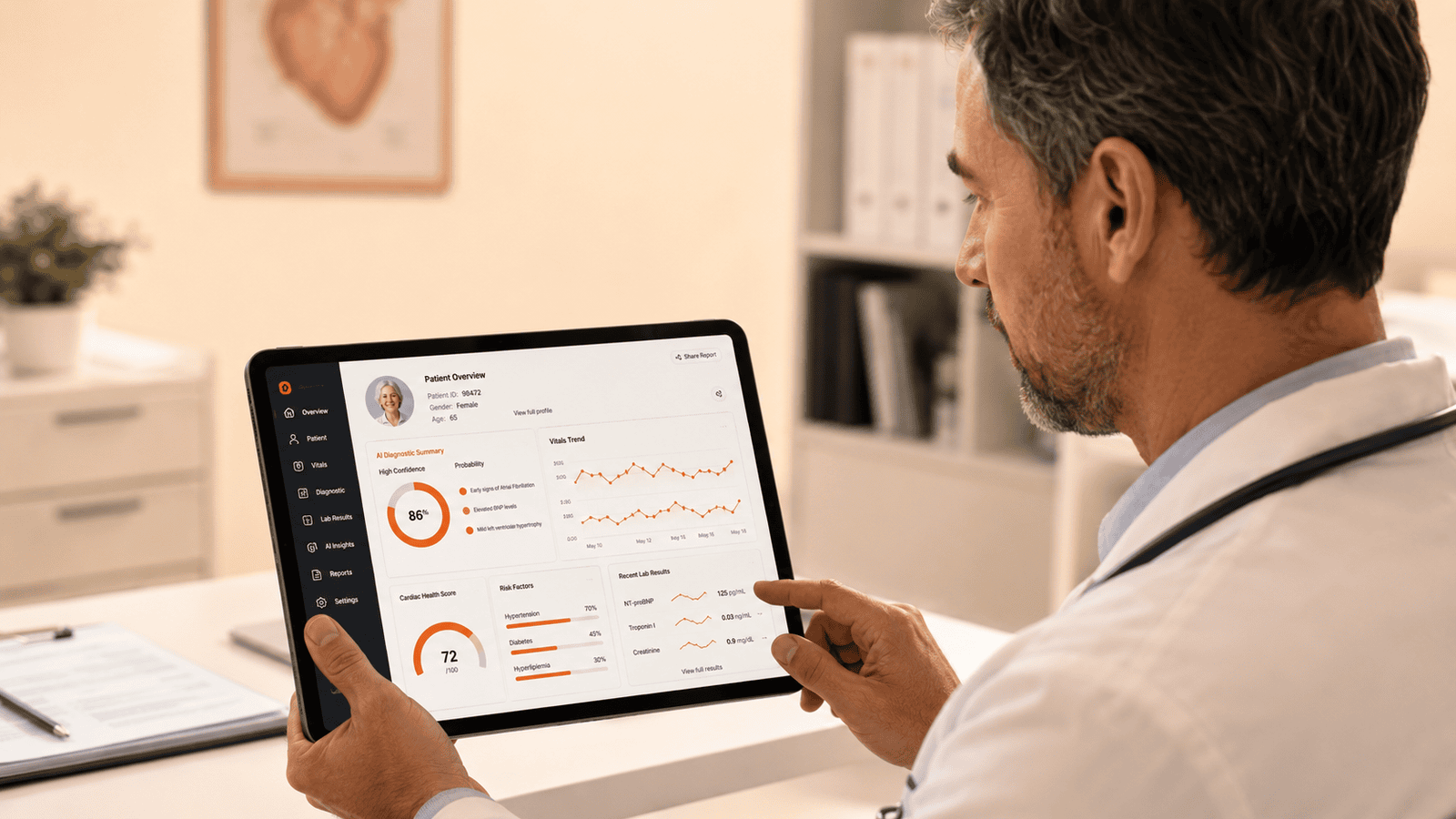
A clinical data integration that unified previously siloed patient records.

View Case Study
Halberd Capital
Finance

Halberd Capital

A scheduling AI tool that reduced appointment no-shows meaningfully.

View Case Study
Testimonial

What clients say

“What stood out was how grounded the whole approach was, not just chasing what's trendy. +57% conversion rate within a few months, and that's held up months later.”

CH
Casimir Halvorsen

Head of Data, Vantagepoint Commerce

FAQ

Common questions

How do you handle sensitive patient data requirements?

Systems are designed with relevant healthcare data handling requirements in mind, though we recommend confirming specifics with your compliance team.

Is this meant to replace clinical judgment?

No — our AI solutions are designed to support and inform clinical decision-making, not replace it.

Can it integrate with our existing EHR?

Yes, integration with common EHR systems is a standard part of healthcare AI projects.

What kinds of AI use cases are most common in healthcare?

Administrative automation, predictive risk flagging, and clinical documentation support are common starting points.

How long does a healthcare AI project take?

Most projects take 8–14 weeks depending on data complexity and validation requirements.

Can AI help reduce clinical documentation burden specifically?

Yes, reducing documentation burden through AI-assisted note-taking or summarization is one of the more common and well-received healthcare AI applications.

Do you ensure HIPAA compliance throughout the development process?

Yes, HIPAA compliance is built into architecture and process from the start, treated as a foundational requirement rather than an afterthought.

Can this help identify patients at risk of readmission?

Yes, readmission risk identification based on genuine clinical and behavioral patterns is a valuable and well-suited AI application in healthcare.

Do you work with both hospitals and smaller clinical practices?

Yes, we scope engagements appropriately for organizations of different sizes, from smaller practices to larger hospital systems.

Can AI help with appointment scheduling and patient communication?

Yes, administrative applications like scheduling and communication support are common, valuable, and lower-risk starting points for many organizations.

Do you provide training for clinical staff on using new AI tools?

Yes, we provide training tailored specifically to how clinical staff will actually interact with the tools during their genuine daily workflow.

Can this help with medical coding and billing accuracy?

Yes, AI-assisted coding support helps improve accuracy and reduce the manual burden of translating clinical documentation into billing codes.

Do you provide ongoing model monitoring after deployment?

Yes, ongoing monitoring helps catch performance drift, particularly important given the genuine stakes involved in healthcare applications.

Can smaller practices realistically afford healthcare AI implementation?

Yes, we scope engagements appropriately for practices of different sizes, starting with lower-cost, high-value administrative applications where budget is a genuine constraint.

How do you address potential bias in healthcare AI models?

Bias testing is built into our development process, checking that models don't inadvertently encode discriminatory patterns present in historical healthcare data.

Can this help with clinical trial patient matching?

Yes, matching patients to relevant clinical trials based on genuine eligibility criteria is a valuable application for research-oriented organizations.

Do you provide ongoing support after the system is deployed?

Yes, ongoing support helps clinical teams as questions arise and needs continue evolving after initial deployment.

Ready to explore AI for Healthcare?

Let's talk about your project — no pressure, just a straightforward conversation about what you need.

Talk to an AI Expert

This website stores cookies on your computer. Cookie Policy