
Get In Touch
hello@digitallyscaled.com
Ph: +1 (713) 949-5161
Office
Houston, TX, United States
Home/AI/AI for Manufacturing
AI for Manufacturing

AI that catches problems before they become expensive.

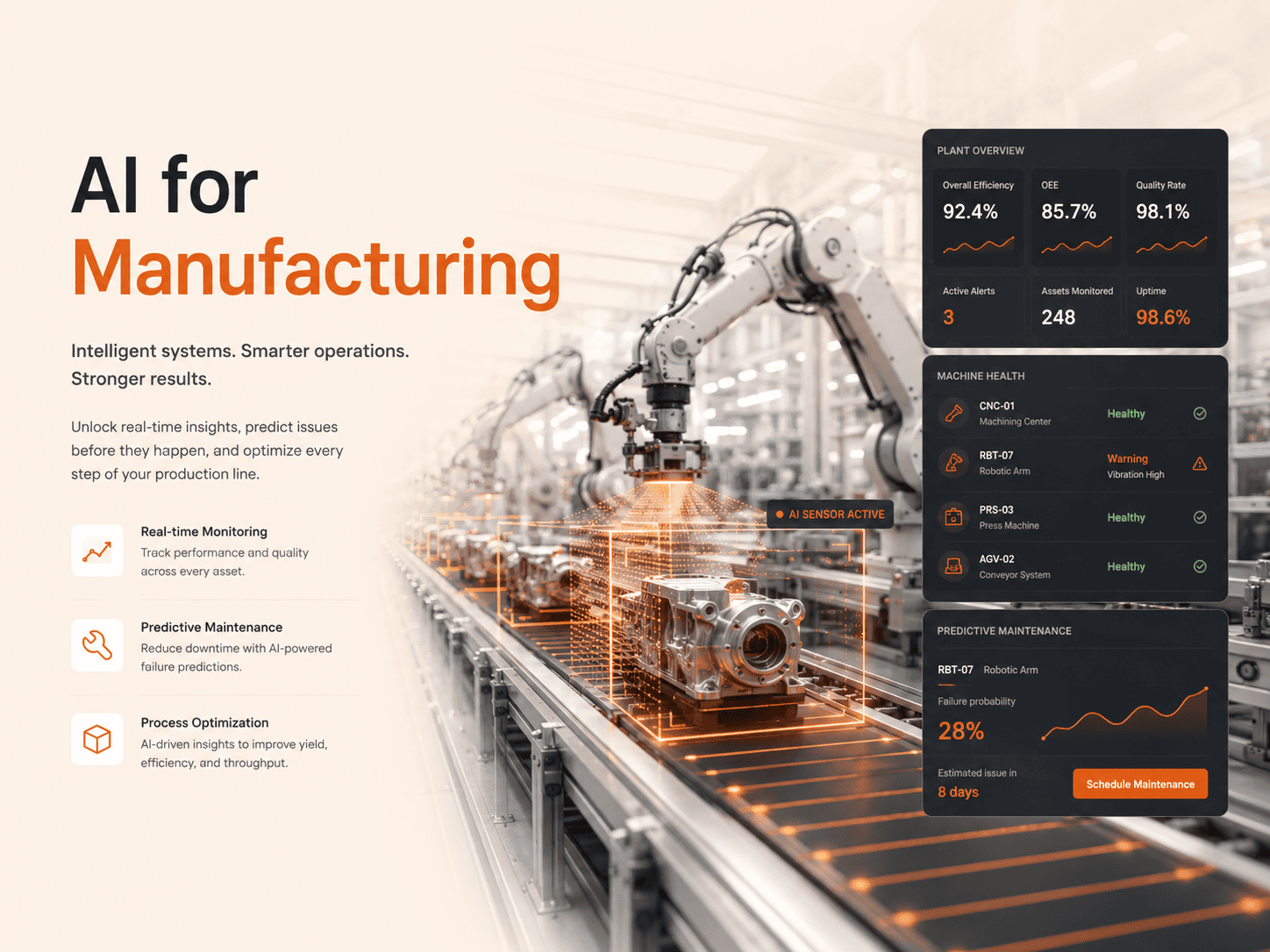
AI solutions for manufacturing operations — focused on catching issues early, when they're still cheap to fix.
AI for Manufacturing digitallyscaled
22+
Manufacturing AI Projects
+24%
Avg. Efficiency Gain
8–14 wks
Avg. Build Time
24/7
Support
Overview

Why manufacturing AI genuinely works best catching problems early

Manufacturing defects and equipment failures genuinely cost considerably more to address after the fact than they would have cost to catch early — wasted material, halted production lines, and quality issues that reach customers before anyone on the floor noticed something was wrong. AI applied to manufacturing genuinely shifts this dynamic, identifying subtle patterns in production data that predict problems before they fully manifest, giving your team meaningful lead time to intervene while the cost of doing so remains genuinely manageable.

Defect detection through computer vision represents one of the most common and effective starting points, though the specific right starting point genuinely depends on your particular production challenges and existing data infrastructure. IoT sensors already in place accelerate implementation considerably, though we can also help plan sensor deployment where you're starting without this infrastructure already established. Reducing false positives receives genuine ongoing attention, since detection systems that cry wolf too often quickly lose the trust of floor staff who learn to ignore alerts. We plan implementation to minimize disruption to ongoing production, recognizing that manufacturing operations genuinely can't afford extended downtime just to deploy new technology, and we're realistic about project timelines based on your specific production complexity.

What's Included

Everything this solution actually covers

Predictive Maintenance

Catching equipment issues before they cause unplanned downtime.

Quality Inspection AI

Computer vision that catches defects faster and more consistently than manual review.

Production Optimization

AI-informed adjustments that improve throughput and reduce waste.

Anomaly Detection

Early flagging of unusual patterns in production data.

Demand Forecasting

Production planning grounded in more accurate demand signals.

Ongoing Support

We stay on for retraining as equipment and processes change.

Our Process

How we get there

01

Discover

We assess your production data, equipment, and current pain points.

02

Design

We design the AI use case around the highest-impact opportunity first.

03

Build & Validate

We build and validate against real production conditions.

04

Deploy & Support

We deploy and support ongoing operation and retraining.

Tech We Use

Built on tools that scale with you

PythonPyTorchOpenCVMQTT
Recent Work

A few projects we’ve shipped recently

Cyphergate Commerce
Retail

Cyphergate Commerce

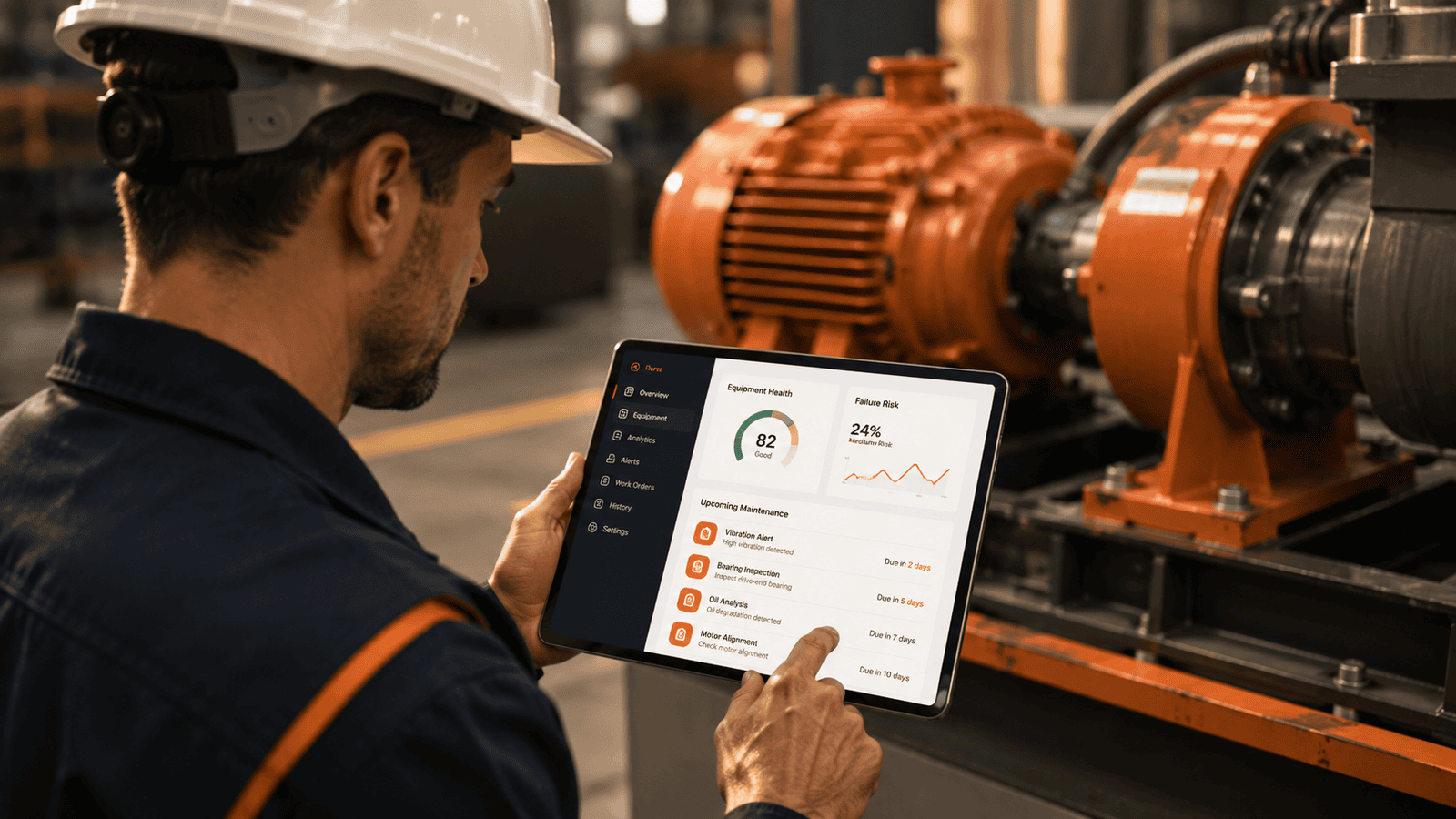
A predictive maintenance system that flagged equipment failure risk weeks early.

View Case Study
Duskwood Technologies
SaaS

Duskwood Technologies

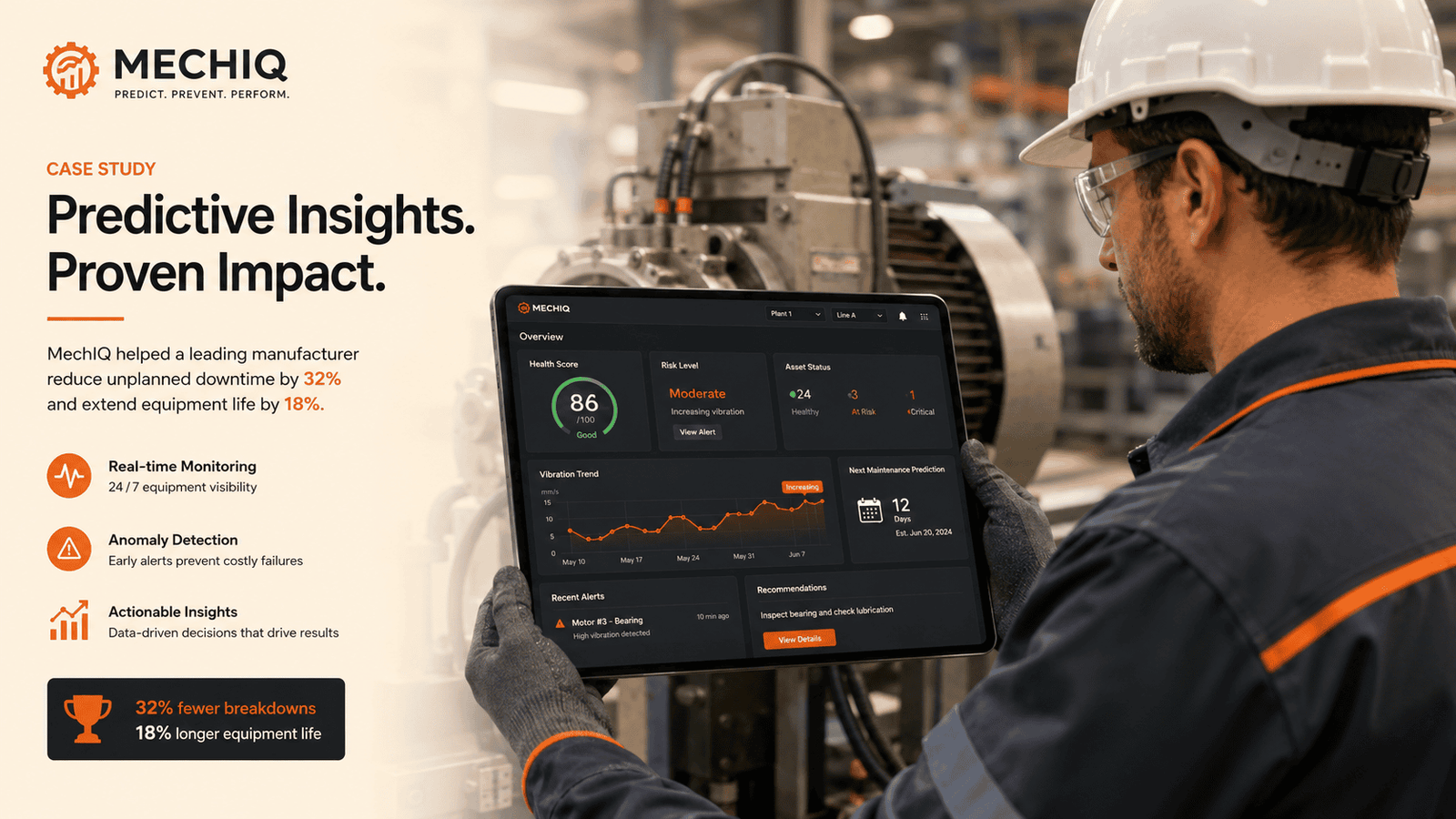
A quality inspection vision system that caught defects a manual process missed.

View Case Study
Emberline Medical Group
Healthcare

Emberline Medical Group

An anomaly detection system that identified a recurring production issue.

View Case Study
Fallcrest Capital
Finance

Fallcrest Capital

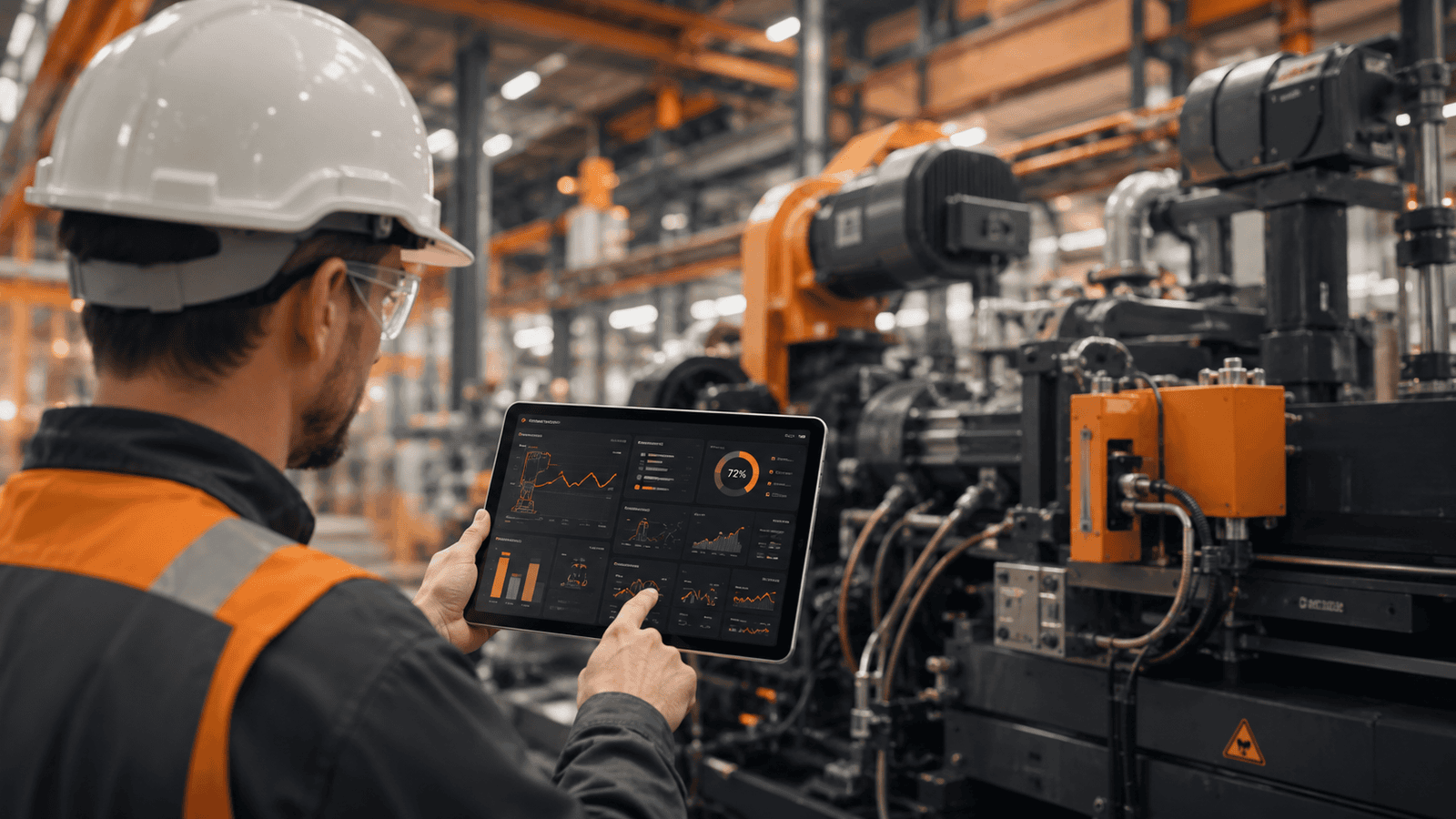
A production optimization model that improved throughput on a key line.

View Case Study
Testimonial

What clients say

“They took the time to understand the actual problem before proposing a model. +24% conversion rate within a few months, which is exactly what we needed.”

KF
Kazimiera Falkenrath

Head of AI, Cyphergate Commerce

FAQ

Common questions

What's the most common starting point for manufacturing AI?

Predictive maintenance and quality inspection tend to have the clearest, fastest ROI — we'll assess what fits your specific operation.

Do you need IoT sensors already in place?

Some data source is needed, though it doesn't always require a full sensor overhaul — we assess what's feasible with your current setup.

Can AI reduce false positives in defect detection?

Yes, rigorous validation against real production data is specifically aimed at reducing both missed defects and false alarms.

How disruptive is implementation to ongoing production?

We design implementation to minimize disruption, testing alongside existing processes before any cutover.

How long does a manufacturing AI project take?

Most projects take 8–14 weeks depending on data availability and the specific use case.

Can this help predict equipment failures before they cause downtime?

Yes, predictive maintenance based on genuine sensor data patterns is a valuable application that helps avoid costly unplanned downtime.

Do you help select which production lines to start with?

Yes, identifying the genuinely highest-value starting point based on current pain points and data availability is part of our initial planning.

Can AI help optimize production scheduling based on real-time conditions?

Yes, schedule optimization responsive to real-time floor conditions is a valuable complementary application alongside defect and failure prediction.

How much historical production data do we need before starting?

Data requirements vary by use case, but we're honest during initial assessment about whether your existing historical data genuinely supports strong initial results.

Can this integrate with our existing manufacturing execution system?

Yes, integration with existing MES infrastructure is a priority, avoiding the disruption of building AI capability in isolation from systems you already rely on.

Do you provide ongoing support as production processes evolve?

Yes, ongoing support helps refine models as your production processes and equipment genuinely continue evolving after initial deployment.

Can this help with quality control documentation for regulated industries?

Yes, quality control documentation supporting regulatory compliance can be integrated alongside the core defect detection functionality.

Do you provide training for floor staff who will work alongside the system?

Yes, we provide training helping floor staff understand and effectively work alongside the AI system as part of their daily routine.

Can smaller manufacturing operations realistically benefit from this?

Yes, we scope implementation appropriately for smaller operations, matching complexity to your actual production scale and genuine needs.

Can this help track overall equipment effectiveness metrics?

Yes, OEE tracking based on genuine real-time floor data is a valuable complementary application alongside defect and failure prediction.

Can this help reduce scrap and material waste specifically?

Yes, earlier defect detection directly helps reduce scrap and material waste by catching issues before they compound further down the line.

Ready to explore AI for Manufacturing?

Let's talk about your project — no pressure, just a straightforward conversation about what you need.

Talk to an AI Expert

This website stores cookies on your computer. Cookie Policy