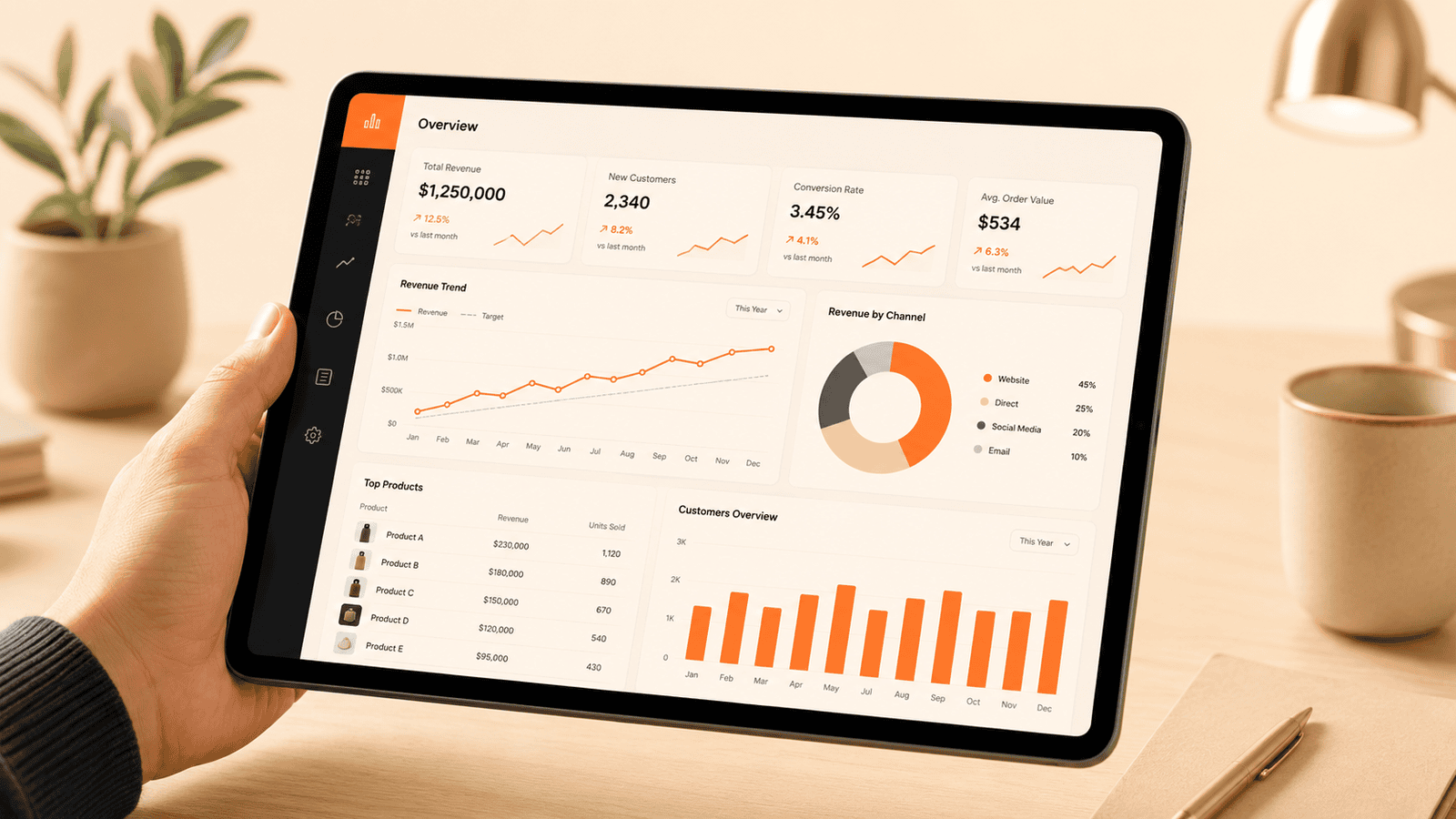


B2B marketplace platforms get built with consumer marketplace assumptions baked in, which often doesn't fit. Here's what actually matters for B2B specifically, and why the gap between the two matters more than most first-time builders expect.
Trust Verification Matters More Than Consumer Platforms
B2B buyers and sellers typically need more robust verification and credentialing than consumer marketplaces, since transaction sizes and business risk are usually meaningfully higher. A consumer marketplace can tolerate a certain amount of anonymity; a B2B one dealing in five- and six-figure transactions generally can't, without eroding the trust that makes the whole marketplace function.
This means business verification, credit checks in some categories, and clear seller history all become core platform features rather than optional add-ons, which is a meaningfully different starting requirement than most consumer marketplace templates assume.
Pricing Is Rarely as Simple as a Fixed Number
Volume discounts, negotiated rates, and custom quoting are far more common in B2B than consumer marketplaces, and the platform needs to support that flexibility rather than forcing rigid, fixed pricing. A buyer purchasing at scale expects pricing that reflects their volume, and a platform that can't accommodate that will push serious buyers toward direct relationships outside the marketplace instead.
Building genuine pricing flexibility in from the start, rather than retrofitting it after launch, avoids a costly architectural rework once real buyers start asking for terms the platform wasn't designed to handle.
Procurement Workflows Need Real Support
Multi-step approval processes on the buyer side are common in B2B and often get overlooked by platforms designed primarily around a simple, single-click consumer purchase flow. A purchasing decision that needs sign-off from a manager, then finance, then possibly legal, doesn't fit a checkout flow built for an individual consumer's impulse purchase.
Supporting purchase requisitions, approval chains, and purchase orders as first-class platform features, rather than an afterthought, reflects how B2B buying actually happens inside real organizations.
Integration With Existing Business Systems Matters More
B2B buyers often expect marketplace activity to connect with their own procurement or accounting systems, a requirement that rarely comes up in consumer marketplace design. A buyer's finance team wants purchase records flowing automatically into their own ERP or accounting software, not a separate, disconnected record they have to manually reconcile.
Building for this kind of integration from early in the platform's architecture, rather than treating it as a future nice-to-have, significantly widens the pool of serious enterprise buyers willing to actually adopt the marketplace.
How Seller Onboarding Differs From Consumer Marketplaces
Onboarding a seller onto a B2B marketplace often involves catalog complexity that consumer platforms don't have to handle — detailed product specifications, compliance documentation, bulk pricing tiers, and sometimes region-specific variants of the same product. A seller onboarding flow built for a simple consumer product listing will feel inadequate almost immediately to a serious B2B seller trying to represent their actual catalog accurately.
Building a B2B marketplace and want it designed around how B2B buyers actually operate? Custom SaaS Product Development
Why Dispute Resolution Needs More Structure in B2B
A consumer marketplace dispute typically involves a modest dollar amount and a straightforward resolution path. A B2B dispute over a large order, a quality issue, or a contract term needs more structured documentation, evidence submission, and often a longer resolution timeline that reflects the higher stakes involved. Platforms that treat dispute resolution as a copy-paste of consumer marketplace logic tend to leave both buyers and sellers unsatisfied with how conflicts actually get resolved.
How to Think About Marketplace Liquidity for B2B Categories
B2B categories often have fewer buyers and sellers than consumer categories, which changes how a marketplace needs to think about liquidity. Rather than relying purely on organic discovery, many successful B2B marketplaces invest more deliberately in curated matchmaking, account-based outreach, or hybrid models that combine marketplace dynamics with more traditional sales relationship-building in the early stages.
Common Mistakes First-Time B2B Marketplace Builders Make
The most common mistake is copying a successful consumer marketplace's feature set without questioning whether each feature actually serves a B2B buyer's real workflow. A second common mistake is underestimating how long B2B sales cycles are, and building growth expectations around consumer-marketplace-speed adoption that B2B categories rarely match. A third is neglecting account management tooling, assuming self-service alone will suffice for buyers used to a dedicated point of contact.
How Payment Terms Complicate B2B Transactions
Consumer marketplaces overwhelmingly assume payment happens at the moment of purchase. B2B buyers frequently expect net-30 or net-60 payment terms, purchase orders processed against an approved credit line, or invoicing that happens separately from order placement entirely. A platform that can't accommodate this reality forces buyers into an unfamiliar, friction-heavy payment experience that doesn't match how they actually run their business.
Why Multi-User Buyer Accounts Matter
A single business buyer account often needs to support multiple individual users with different permission levels — someone who can browse and request quotes, someone who can approve purchases, someone who manages the account relationship overall. Consumer marketplaces built around a single individual user account don't naturally accommodate this organizational structure without meaningful rearchitecting.
How Catalog Data Quality Affects Buyer Trust
B2B buyers researching a significant purchase expect detailed, accurate technical specifications, not just an appealing product photo and a short description. Inconsistent or incomplete catalog data across different sellers erodes buyer confidence in the marketplace as a whole, making catalog data standards and seller accountability for accuracy a genuine platform-level concern, not just an individual seller's responsibility.
The Role of Sample Requests and Extended Evaluation Periods
Many B2B purchases, particularly for materials or components, involve a sample or trial evaluation period before a full order commitment. Building support for this extended, multi-step evaluation process into the platform, rather than assuming every transaction proceeds directly from browsing to full purchase, better reflects how serious B2B buying decisions actually unfold in practice.
Why Analytics and Reporting Needs Differ for B2B Buyers
B2B buyers, particularly procurement teams, often need detailed spending reports and purchase history analytics to support their own internal budgeting and vendor management processes. Providing this reporting natively within the marketplace platform reduces friction for buyers who would otherwise need to manually reconstruct this data themselves.
How Long-Term Contracts Fit Into a Marketplace Model
Some B2B relationships, once established through a marketplace, evolve into longer-term supply contracts that don't fit a typical transactional marketplace flow. Platforms that support transitioning a marketplace relationship into a structured ongoing contract, rather than forcing every reorder through the same one-off transaction flow, better serve how mature B2B relationships actually develop.
Key Takeaways
- Trust verification and credentialing need to be more robust than typical consumer marketplace defaults, given higher transaction stakes.
- Flexible, negotiable pricing support is often necessary rather than optional for serious B2B buyers.
- Multi-step procurement and approval workflows need to be built in as core features, not retrofitted later.
- Integration with buyers' existing business systems significantly widens serious enterprise adoption.
- B2B seller onboarding and dispute resolution both need more structure than consumer marketplace equivalents.
Frequently Asked Questions
How is a B2B marketplace different from a simple B2B directory?
A marketplace facilitates actual transactions — pricing, ordering, payment — while a directory simply lists businesses for discovery, requiring buyers to transact outside the platform entirely.
Do we need custom pricing logic from day one?
If your buyers are likely to expect volume discounts or negotiated terms, yes — retrofitting pricing flexibility later is significantly more costly than building it in from the start.
How long does it typically take to build a B2B marketplace MVP?
Most B2B marketplace MVPs take three to six months depending on catalog complexity and how many procurement workflow features are included in the initial scope.
Should we focus on buyers or sellers first when launching?
Most successful marketplaces focus on solving one side's problem deeply first, then use that concentrated value to attract the other side, rather than trying to grow both simultaneously from zero.
Can an existing e-commerce platform be adapted into a B2B marketplace?
Sometimes, for simpler cases, but genuine multi-seller marketplace dynamics — seller onboarding, commission handling, dispute resolution — usually require capabilities standard e-commerce platforms weren't built for.
Do B2B marketplaces need to support invoicing and payment terms beyond instant payment?
Yes, in most cases — net payment terms and purchase order-based transactions are standard B2B buying behavior that platforms need to accommodate.
Should sample requests be supported as a distinct workflow?
For categories where sampling is common, yes — building this multi-step evaluation process in reflects how serious B2B purchase decisions actually happen.
Do B2B buyers need detailed spending analytics built into the platform?
Often yes, particularly procurement teams who need this data for internal budgeting and vendor management, making native reporting a valuable platform feature.
Can a marketplace relationship evolve into a longer-term contract?
Yes, and platforms that support this transition serve mature B2B relationships better than forcing every reorder through the same one-off transaction flow.
Is mobile access important for B2B marketplace buyers?
Increasingly yes, though B2B purchasing still often starts on desktop for research before a decision, so mobile support matters most for order tracking and quick reorders.