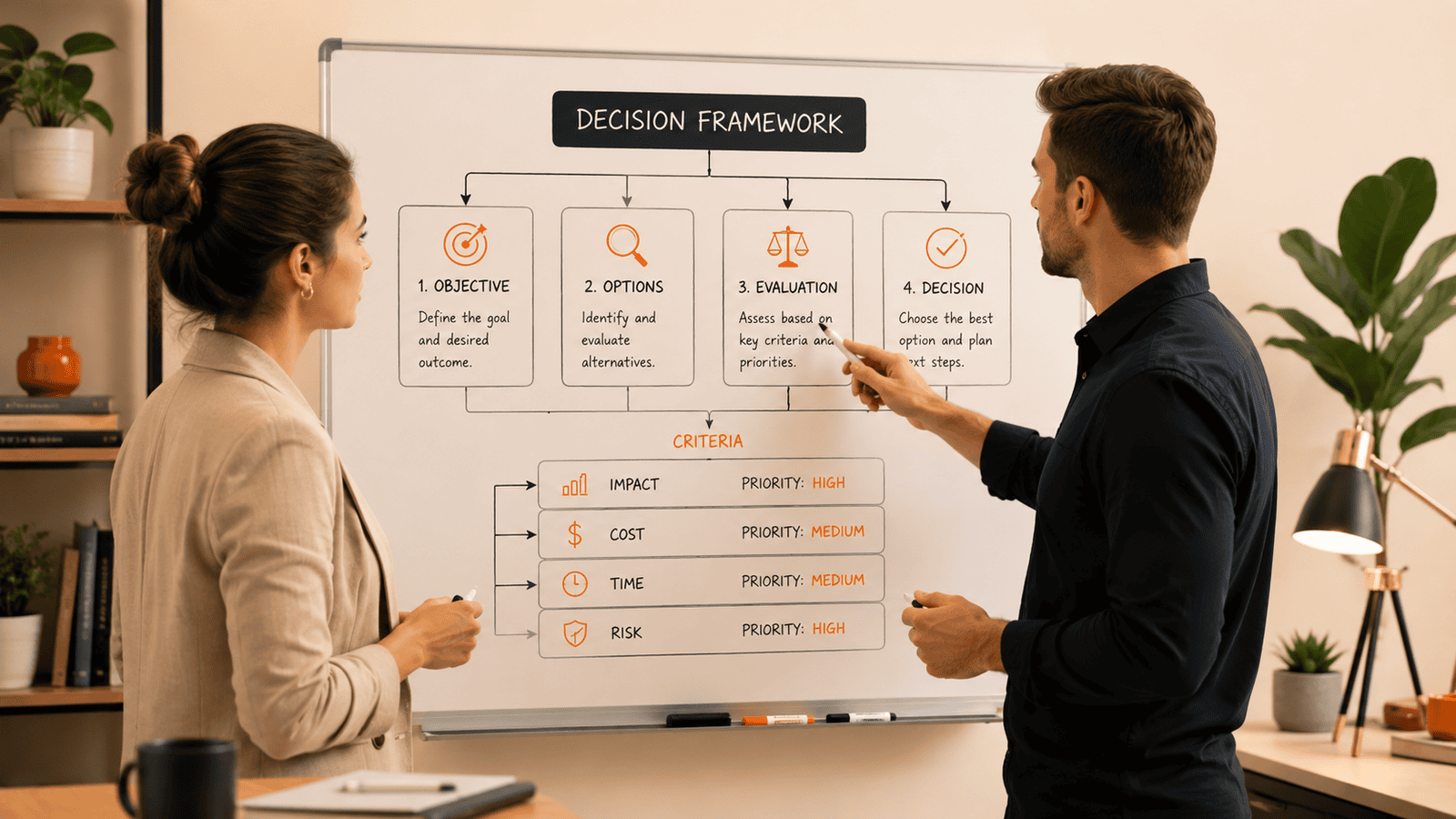

Growing businesses often reach a point where hiring an in-house development team feels like the natural next step. The decision deserves more scrutiny than the instinct alone typically gets.
In-House Makes Sense With Genuinely Continuous, Substantial Work
If you have enough ongoing development need to keep a full-time team genuinely busy and productive, in-house hiring can make real financial sense; without that volume, you're paying full-time cost for genuinely part-time actual need.
Agencies Offer Breadth an In-House Team Rarely Matches
A good agency brings a range of specialized skills across a team, while in-house hiring for the same breadth requires multiple specialized hires most growing businesses genuinely can't justify all at once.
The Real Cost Comparison Isn't Just Salary Versus Hourly Rate
In-house hiring includes real benefits, management overhead, and recruiting cost that a simple hourly rate comparison misses entirely, meaning the true cost gap between the two options is often smaller than an initial surface-level comparison suggests.
A Reasonable Way to Decide
Honestly estimate your genuine ongoing development volume for the next year; if it's consistently substantial and predictable, in-house may make sense; if it's variable or project-based, an agency relationship typically offers more genuine flexibility.
Weighing in-house versus agency for your specific situation? About digitally scaled
How to Honestly Estimate Your Genuine Ongoing Development Volume
Reviewing the past year's actual development requests and their real time cost, not a hopeful projection of future need, gives a more honest baseline for estimating whether genuine volume justifies in-house hiring versus continuing an agency relationship.
Businesses that overestimate their genuine ongoing need, based on an unusually busy recent period rather than sustained typical demand, sometimes hire in-house prematurely and then struggle to keep a full team genuinely productive once that unusual busy period naturally passes.
Why Hybrid Models Increasingly Make Sense for Many Growing Businesses
Maintaining a smaller in-house team for core, ongoing needs while using an agency relationship for specialized or overflow work captures real benefits of both approaches without fully committing to either extreme, an increasingly common pattern among growing mid-sized businesses.
How Knowledge Retention Differs Between the Two Models
In-house teams naturally retain institutional knowledge more consistently than rotating agency staff might, though a genuinely strong, stable agency relationship with the same dedicated team members over time can substantially close this particular gap.
Why Recruiting Difficulty Should Factor Into the In-House Decision
Certain specialized technical skills are genuinely harder to recruit for than others, and honestly assessing your realistic ability to hire and retain the specific talent you'd actually need matters as much as the theoretical cost comparison alone.
A Reasonable Way to Transition Between Models If Your Needs Change
Starting with an agency relationship while genuine need and volume become clearer, then transitioning toward in-house once that need is proven substantial and consistent, reduces the real risk of premature commitment compared to hiring in-house immediately based on early, unproven assumptions.
How to Evaluate Whether Your Current Agency Relationship Is Actually Working Well
Reviewing response time, code quality, and genuine understanding of your business over the course of the relationship reveals whether your current agency is delivering real value, separate from the broader in-house-versus-agency question this piece addresses.
A struggling agency relationship shouldn't automatically push toward in-house hiring if the underlying issue is agency fit rather than the fundamental model itself — sometimes switching to a different agency solves the real problem more directly than the larger, more disruptive shift to in-house hiring.
Why Onboarding Cost Differs Significantly Between the Two Models
A new in-house hire typically needs weeks to months of genuine onboarding before reaching full productivity, while an established agency relationship, already familiar with your codebase and business, can often begin new work considerably faster.
How Company Culture Fit Should Factor Into This Decision
In-house team members become genuinely part of company culture in a way agency relationships, however collaborative, generally don't replicate to the same degree, a real factor worth weighing for businesses where deep cultural integration specifically matters.
Why Scaling Up or Down Differs Meaningfully Between the Two Models
Adjusting agency engagement scope is generally faster and less disruptive than hiring or, worse, laying off in-house staff as genuine business needs fluctuate, making agency relationships genuinely more flexible for businesses facing real, ongoing demand variability.
A Reasonable Way to Combine Both Models for Different Types of Work
Using in-house staff for deeply integrated, ongoing product work while engaging an agency for discrete projects or specialized needs outside core in-house expertise captures genuine benefits of both without forcing an all-or-nothing single-model commitment.
How to Evaluate an Agency's Genuine Domain Expertise Before Committing Long-Term
Reviewing an agency's actual track record in your specific industry, not just general development competence, reveals whether they'll genuinely understand your business context or require the same learning curve a new in-house hire would.
Why Communication Overhead Differs Between the Two Models
Agency relationships often require more structured, deliberate communication given physical or organizational distance, while in-house teams benefit from more spontaneous, informal daily interaction that can meaningfully speed genuine collaboration.
Why Intellectual Property and Confidentiality Considerations Differ Between the Two
In-house work automatically stays fully within the company, while agency relationships require clear contractual IP and confidentiality terms, worth reviewing carefully for businesses with genuinely sensitive proprietary technology or data.
How to Evaluate Long-Term Total Cost Including Genuine Turnover Risk
In-house hiring carries real turnover risk requiring costly rehiring and re-onboarding, a factor worth including honestly in any long-term cost comparison against the relative continuity an established agency relationship can offer.
Key Takeaways
- In-house hiring makes financial sense with genuinely continuous, substantial development volume, not sporadic project work.
- Agencies offer breadth of specialized skills that in-house hiring for the same range would require multiple costly hires to match.
- True cost comparison must include benefits, management overhead, and recruiting cost, not just hourly rate versus salary.
- Hybrid models, combining a smaller in-house team with agency support for overflow, increasingly make sense for growing businesses.
- Starting with an agency relationship and transitioning to in-house once need is proven reduces premature commitment risk.
Frequently Asked Questions
How do we know if our development volume genuinely justifies in-house hiring?
Reviewing the past year's actual development requests and time cost, not a hopeful future projection, gives an honest baseline for this decision.
Is a hybrid model between in-house and agency reasonable?
Yes, increasingly common — a smaller in-house team for core needs paired with agency support for overflow captures benefits of both.
Does agency work lose institutional knowledge compared to in-house teams?
Somewhat, though a stable, long-term agency relationship with consistent team members substantially closes this particular gap.
Should recruiting difficulty factor into the in-house decision?
Yes — your realistic ability to hire and retain specific specialized talent matters as much as the theoretical cost comparison.
Is it risky to hire in-house immediately based on early, unproven demand?
Yes — starting with an agency relationship while genuine need becomes clearer reduces the risk of premature, costly commitment.
Should a struggling agency relationship push us toward in-house hiring?
Not automatically — sometimes switching agencies solves the real problem more directly than the larger shift to in-house.
Does agency work really onboard faster than a new in-house hire?
Yes — an established agency relationship already familiar with your codebase can often begin new work considerably faster.
Does company culture fit matter in this decision?
Yes — in-house team members integrate into company culture more deeply than agency relationships generally do.
Is it easier to scale agency engagement than in-house team size?
Yes, generally — adjusting agency scope is faster and less disruptive than hiring or laying off in-house staff.
Should we evaluate an agency's industry-specific expertise, not just general skill?
Yes — genuine domain expertise in your specific industry reveals whether they'll understand your context quickly.
Does communication style really differ between in-house and agency models?
Yes — in-house benefits from spontaneous daily interaction, while agency relationships require more structured communication.
How do IP and confidentiality considerations differ between the two models?
In-house work automatically stays fully internal, while agency relationships require clear contractual terms worth reviewing carefully.
Should turnover risk factor into the long-term cost comparison?
Yes — in-house hiring carries real rehiring cost worth including honestly against agency relationship continuity.
Does industry regulation affect the in-house versus agency decision?
Yes, sometimes — certain regulated industries have specific data handling requirements that can favor in-house control.
Should we involve HR early if considering in-house hiring?
Yes — HR input on realistic hiring timelines and compensation benchmarks improves the accuracy of any cost comparison.
Should we pilot with a smaller in-house hire before building a full team?
Yes, often reasonable — a single strategic hire can validate genuine need before committing to a larger team investment.
Does geographic location matter more for in-house hiring than agency work?
Often yes — in-house hiring may be constrained by local talent pools, while agencies can draw from a broader geographic talent base.
Is it reasonable to negotiate a trial period with a prospective in-house hire?
Some form of structured trial or probationary period is reasonable and common, helping validate genuine fit before full commitment.