
Get In Touch
hello@digitallyscaled.com
Ph: +1 (713) 949-5161
Office
Houston, TX, United States
Home/AI/AI-Powered Process Automation
AI-Powered Process Automation

Automate the parts that were never worth doing manually.

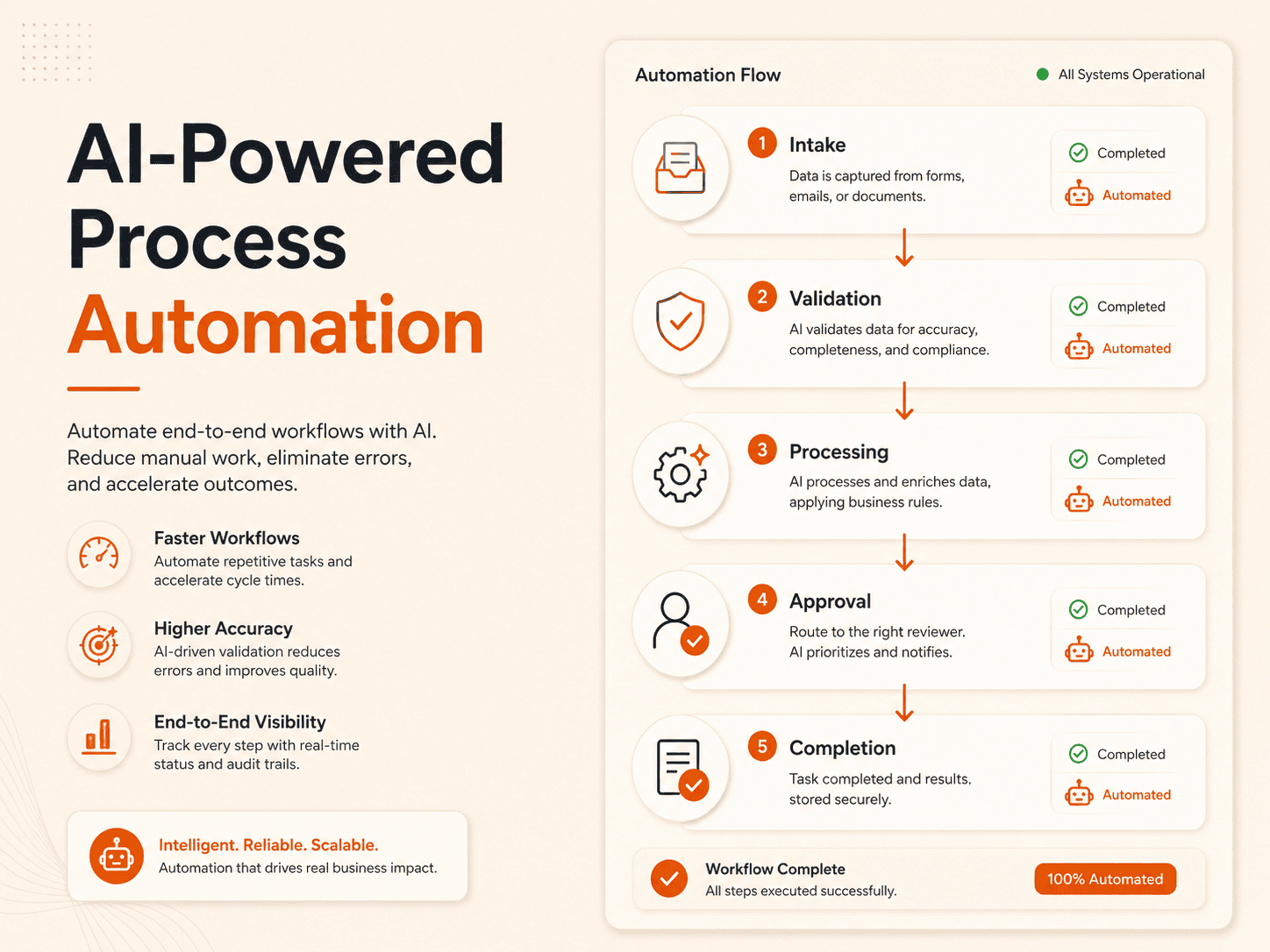
AI-powered process automation that takes over repetitive, rules-heavy work — freeing your team for the parts of the job that actually need a person.
AI-Powered Process Automation digitallyscaled
55+
Processes Automated
-45%
Avg. Manual Hours Saved
4–8 wks
Avg. Build Time
24/7
Support
Overview

What AI-powered process automation actually involves

Traditional rules-based automation breaks the moment a process encounters something it wasn't explicitly programmed to handle. AI-powered process automation genuinely differs by incorporating models capable of interpreting variation, context, and exceptions rather than requiring every possible path to be manually mapped out in advance. This distinction matters most for processes that look repetitive on the surface but actually involve judgment calls, inconsistent input formats, or edge cases that accumulate over time.

We approach automation projects by first mapping the actual current process in detail, including the messy exceptions that rarely make it into official documentation. From there, we design automation logic that handles the genuine variation in the work rather than an idealized version of it, and we build in clear escalation paths for cases that fall outside the system's confidence threshold. The goal isn't automation for its own sake — it's freeing your team from work that doesn't actually need a person, so they can spend time on the parts of the job that genuinely do.

Beyond the initial build, the real value of AI-powered automation tends to compound over time as the system encounters more edge cases and gets refined based on actual production behavior rather than assumptions made during initial scoping. Businesses that treat automation as a one-time project rather than an evolving system typically see diminishing returns, while those that build in regular review cycles continue finding new opportunities as the underlying process itself changes.

What's Included

Everything this solution actually covers

Process Mapping

A clear map of the actual workflow before automating any of it.

Intelligent Automation

AI-driven automation that handles variation, not just rigid rules.

System Integration

Automation connected cleanly to the systems already in your workflow.

Exception Handling

Clear handling for edge cases, with human review where it matters.

Performance Monitoring

Visibility into what's being automated and how well it's working.

Ongoing Optimization

We refine automation as processes and volume change.

Our Process

How we get there

01

Discover

We map the current process in detail, including edge cases.

02

Design

We design automation logic around handling real-world variation.

03

Build

We build and integrate with your existing systems.

04

Launch & Optimize

We launch and continue optimizing based on real performance.

Tech We Use

Built on tools that scale with you

PythonOpenAI APINode.jsREST API
Recent Work

A few projects we’ve shipped recently

Northgate Retail Group
Retail

Northgate Retail Group

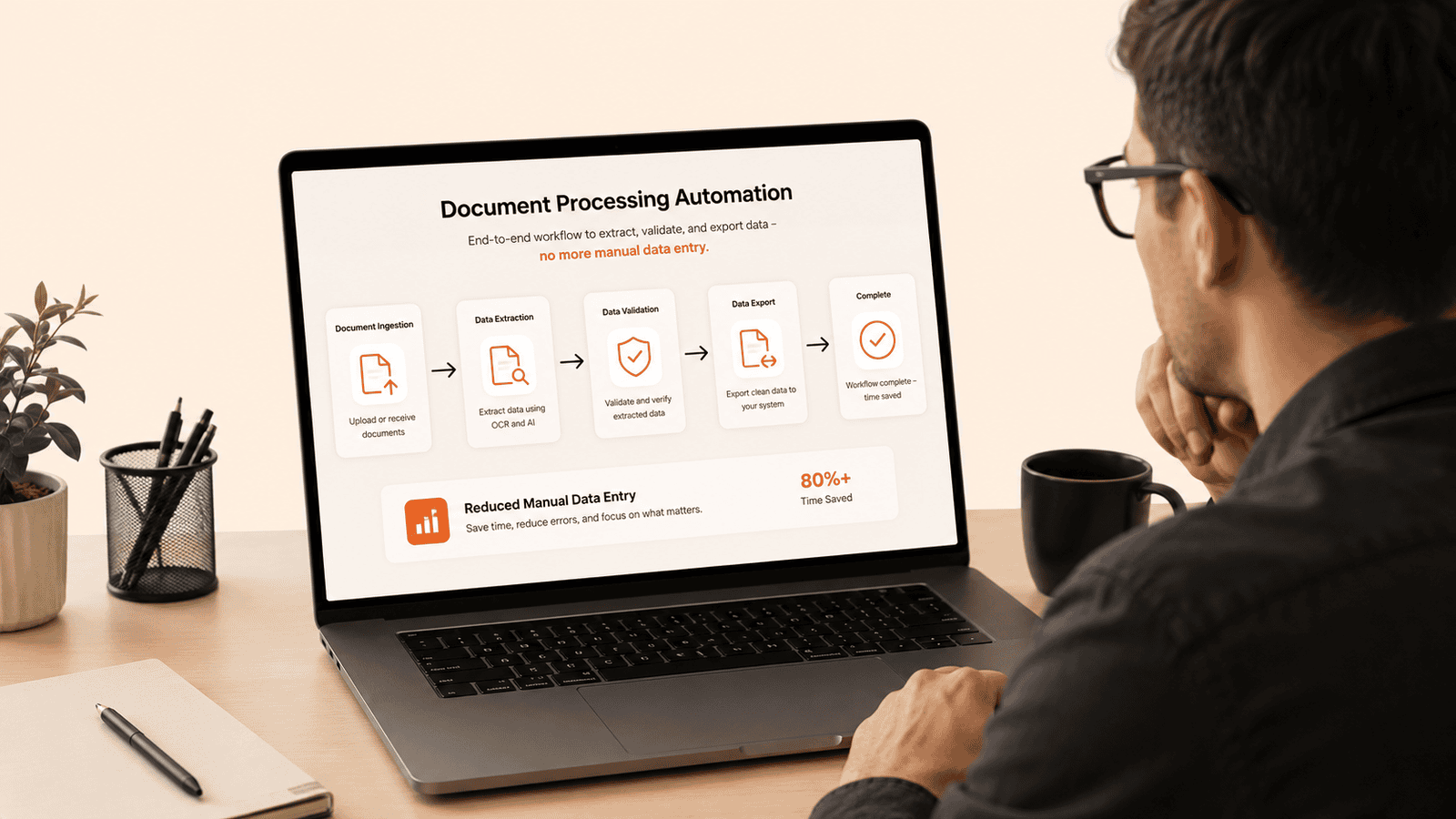
A document-processing automation that cut manual data entry significantly.

View Case Study
Overpass Software
SaaS

Overpass Software

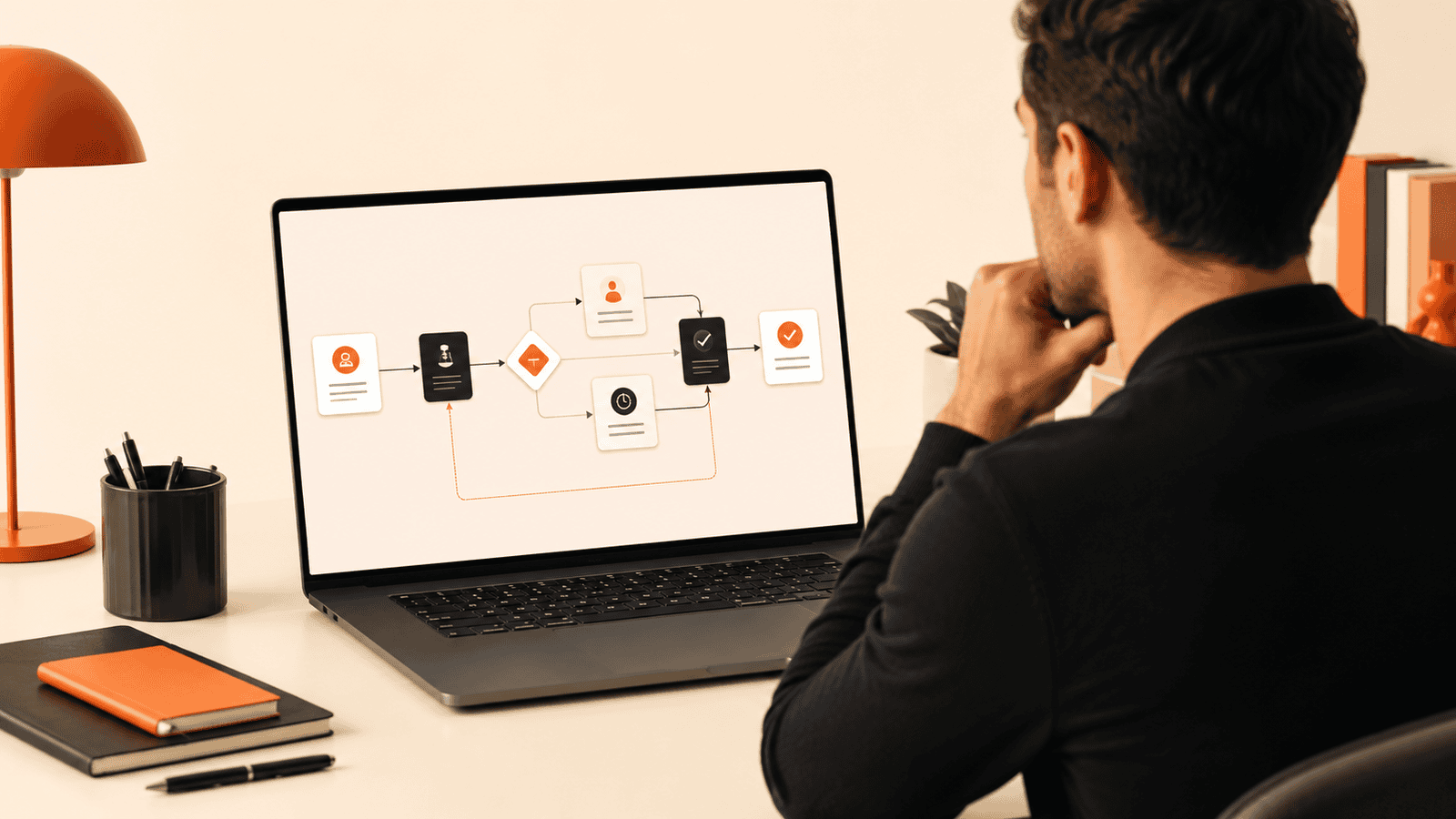
An intelligent routing system that replaced a manual triage process.

View Case Study

Pathwell Health
Healthcare

Pathwell Health

An automation that handled a rules-heavy compliance check at scale.

View Case Study
Quorum Consulting
Professional Services

Quorum Consulting

A process automation that freed a team from a repetitive weekly reporting task.

View Case Study
Testimonial

What clients say

“What stood out was how grounded the whole approach was, not just chasing what's trendy. +48% conversion rate within a few months, and that's held up months later.”

SL
Sigrid Lindqvist

CTO, Northgate Retail Group

FAQ

Common questions

How is AI-powered automation different from basic rules-based automation?

AI-driven automation can handle variation and exceptions that rigid rules-based systems struggle with.

What kinds of processes are good candidates for this?

Repetitive, rules-heavy work with clear inputs and outputs — we'll assess your specific process honestly.

How do you handle exceptions the automation can't process?

Clear escalation to human review is built in for cases outside the automation's confidence level.

Can it integrate with our existing systems?

Yes, integration with your existing tools and systems is a core part of the build.

How long does a typical automation project take?

Most projects take 4–8 weeks depending on process complexity and integrations.

How do you decide which processes are worth automating first?

We look at frequency, current time cost, and error rate together — high-volume, error-prone, repetitive work typically offers the fastest and most measurable return.

Will automation replace our team members?

Most engagements free staff from repetitive work rather than eliminating roles, letting people focus on judgment-heavy tasks automation genuinely can't handle well.

What happens if the automation makes a mistake?

We build in monitoring and human review checkpoints so mistakes get caught and corrected quickly, and we use that feedback to improve the underlying logic over time.

Do you provide ongoing support after launch, or just the initial build?

We offer ongoing optimization and support packages, since automation logic often benefits from refinement as your actual process volume and edge cases evolve over time.

What's the difference between this and robotic process automation (RPA)?

Traditional RPA follows rigid, pre-defined rules and breaks when inputs vary; AI-powered automation incorporates models that can interpret variation and context, making it more resilient to real-world messiness.

What kind of ongoing maintenance does automation typically require?

Automation systems generally need periodic review as underlying business processes evolve, plus monitoring for performance and accuracy, though the specific maintenance burden depends on process complexity and volume.

Can automation be scaled up gradually rather than all at once?

Yes, we often recommend starting with a single high-impact process, proving out the approach, then expanding to additional processes once the initial results validate the investment.

Is there a minimum process volume needed to make automation worthwhile?

Not necessarily a hard minimum, but processes with higher volume and frequency typically see faster payback on the initial investment.

Do you sign NDAs or handle sensitive process data confidentially?

Yes, we routinely sign NDAs and treat any process or business data shared during discovery and implementation as strictly confidential.

Ready to explore AI-Powered Process Automation?

Let's talk about your project — no pressure, just a straightforward conversation about what you need.

Talk to an AI Expert

This website stores cookies on your computer. Cookie Policy